





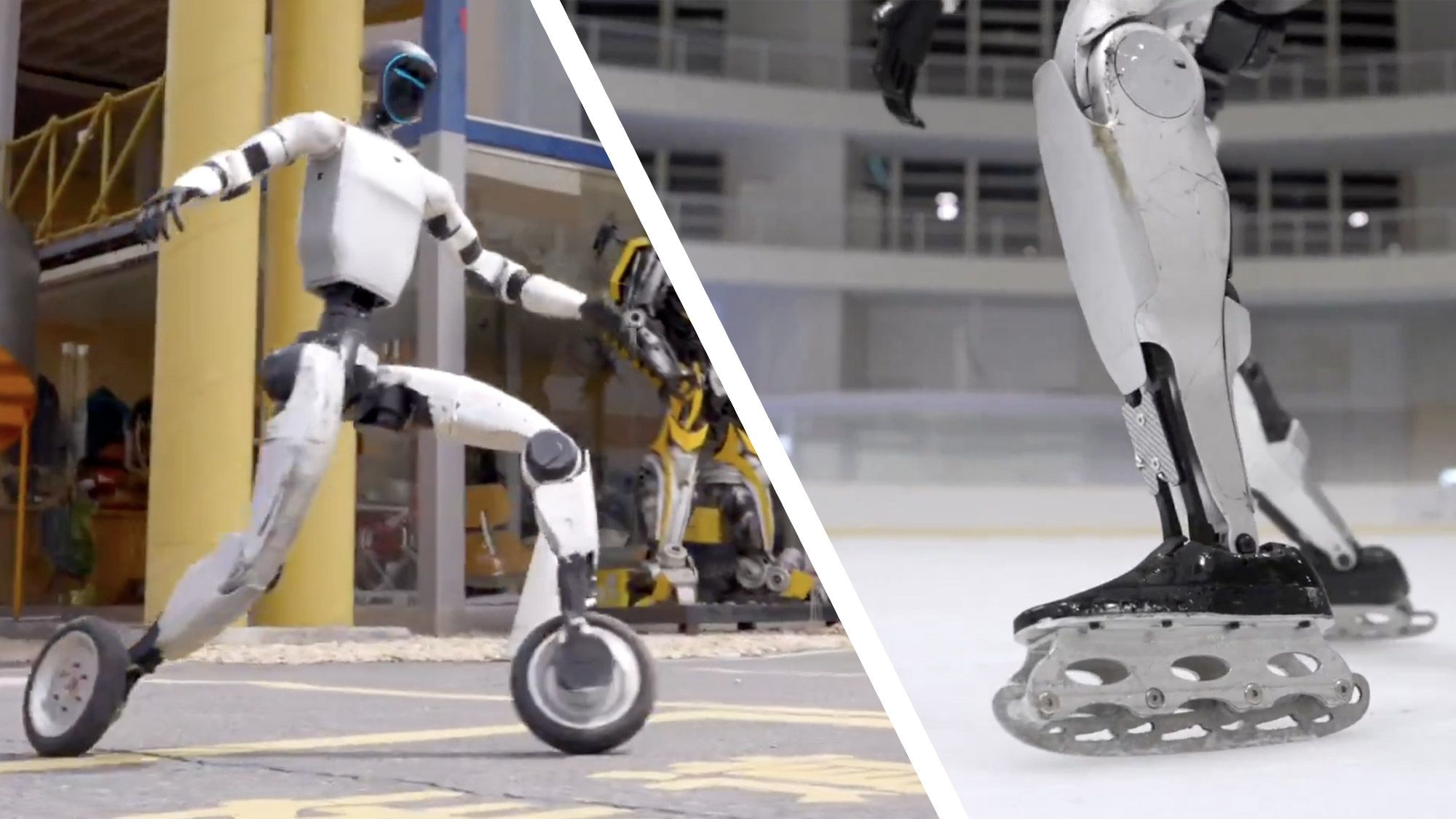
- Unitree shows off some eye-opening new G1 mobility options
- It mastered big wheels and roller blades
- With a suprise ice-skating reveal at the end
It’s widely accepted that the era of mobile robots is upon us. We’ve seen them walk, run, marathon, and leap across a chasm of platforms. Now, though, robot manufacturers like Unitree are starting to mix things up and replace feet with wheels.
Early balancing robots often moved about on wheels (the original Segway was essentially a balancing robot), but humanoid robots like the Unitree G1 generally have, for better or worse, arms, legs, and feet that resemble ours.
The effort to program and train robots to use these limbs naturally has been considerable, aided in recent years by the advent of generative AI. Now, scalable training can happen on a computer, with most failures saved for simulation. By the time these companies dump algorithms into the bots, the robots are walking as well or better than us.
Article continues below
Watch On
This means that walking and running humanoids are now basically solved, and as we’ve seen, there are bots that can run faster than us. Some might argue, though, that wheels are more efficient. Watching Unitree G1 glide around on its wheel feet (not CGI and not sped up, Unitree reminds us), one might be inclined to agree. It moves fast and doesn’t even slow down as it flips over on a single wheel. As is often the case, these trained-up robots are now mastering moves well beyond the ken of average humans.
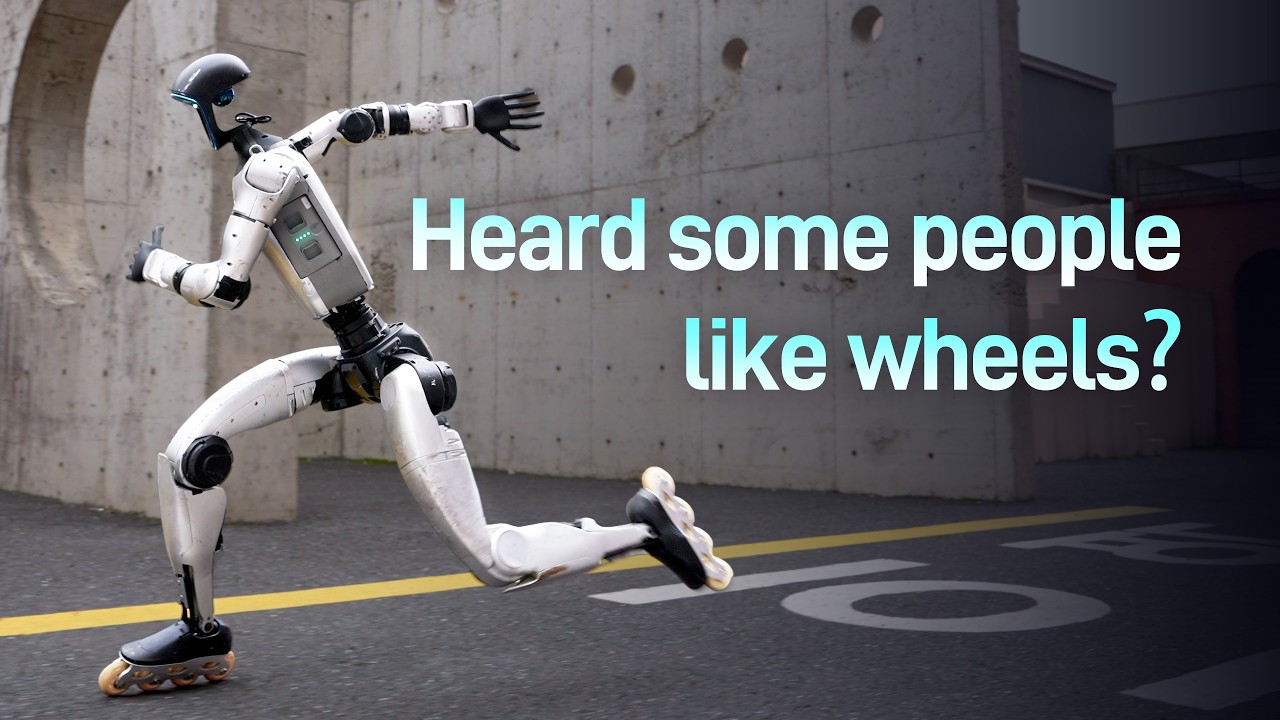
Unitree hasn’t offered much, if any, background on this latest G1 mobility performance, and in the video, the robot quickly moved from the two big wheels to roller blades. It’s in this bit of video that the G1 looks slightly less steady…who am I kidding, it would still catch you in a pinch.
The truly starting part of the video occurs toward the end when Unitree equipped the G1 with a pair of ice skates.
Ice skating is a level above wheel-bound mobility. After all, you not only have to account for how to glide forward on ice but factor in the slipperiness of the surface and how to counter that and not fall flat on your mechanical butt.
Once again, we have to credit digital training with making the G1 look like it’s prepping for, if not figure skating, at least a little Olympic-grade ice hockey.
It’s an exciting one-minute-fifteen-second video to watch, but it also begs the question: why? What is Unitree training its roughly $16,000 robot for? How will would-be consumers use these capabilities? This is assuming, as the video caption implies, that some people want wheels and may be able to buy them as accessories.
I truly believe that a pair of wheel feet might be faster, more effective, and safer in the home, where they will help it better navigate around obstacles and rush to your aid if you’re about to fall. Of course, the roughly 77lb, 4ft-tall robot probably isn’t equipped to break an average-sized person’s fall. In fact, we have ample evidence of the G1’s propensity for pratfalls.

Follow TechRadar on Google News and add us as a preferred source to get our expert news, reviews, and opinion in your feeds.