






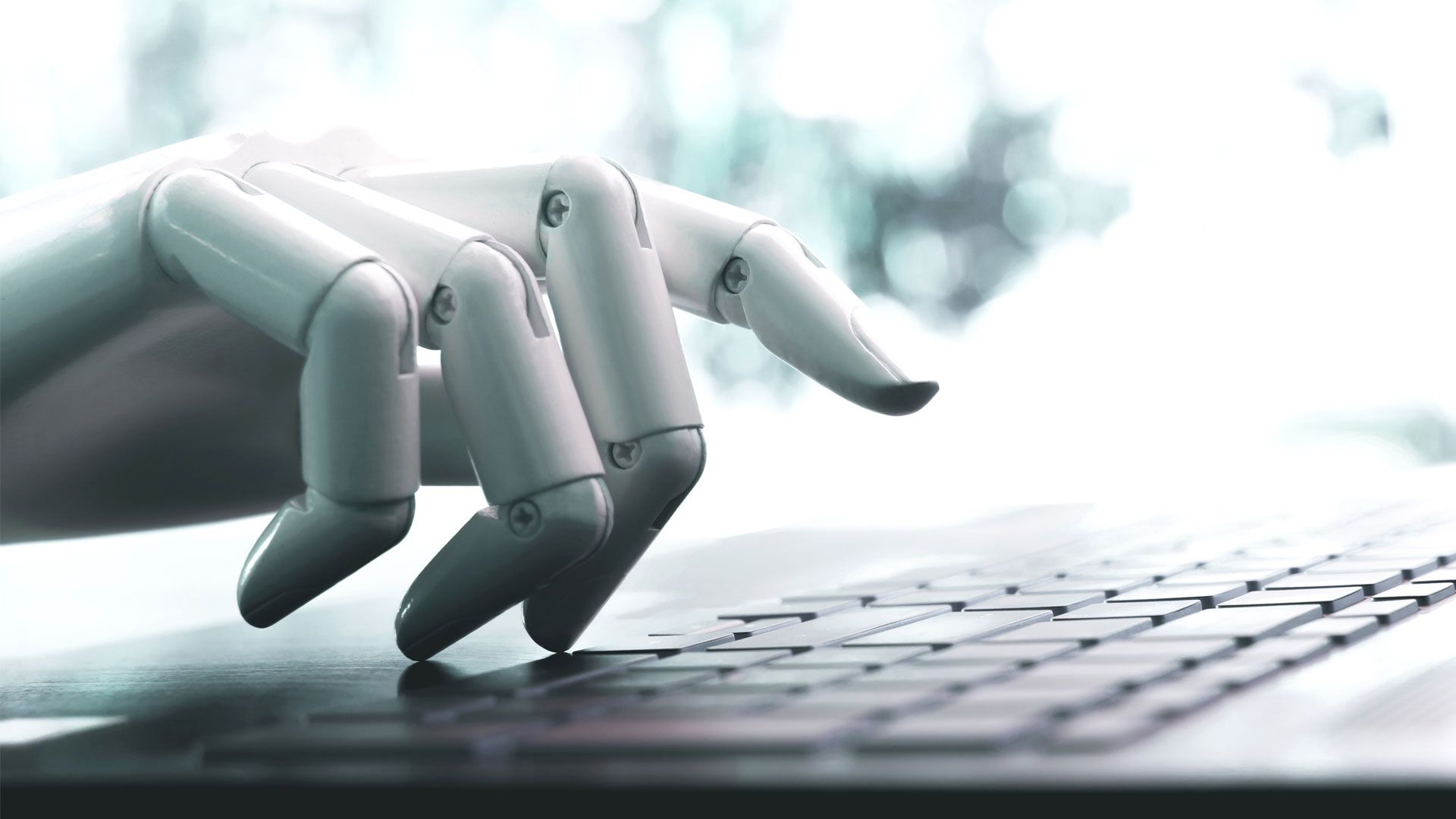
In recent years, roles that combine digital skills with technical or operational expertise have become essential in modern workplaces. Robots managing production or AI systems optimizing infrastructure have become active participants in work, yet human judgment remains central.
These positions connect data and analytics to real-world operations in factories, on construction sites, and across infrastructure networks, allowing organizations to make better informed decisions.
As systems become more capable, the question is no longer whether machines can assist humans, but how humans and machines can work together effectively.
Article continues below
Leading work in autonomous and industrial AI has made one thing clear: this is a turning point for industry. Attention is moving away from what machines can achieve alone and toward how intelligence is applied responsibly in real-world environments, where every decision carries consequences.
Redefining productivity and responsibility
Productivity is no longer measured solely by how many tasks are automated. It is defined by how well humans and machines collaborate. Silver collar professionals do more than operate technology. They guide, supervise, and correct it, taking responsibility for how it behaves and adapts.
As machines moves from theory to action, the human role evolves from operator to steward, ensuring that systems perform safely, efficiently, and ethically.
Actions with real world consequences
A system that advises is one thing, but a system that executes decisions has direct, sometimes immediate impact in the real world. Machines that adjust production schedules or optimize infrastructure directly affect safety and costs.
For instance, a factory system can change the order of tasks to prevent machines from overheating, keeping workers safe and avoiding breakdowns. In these shared environments, outcomes are shaped by both humans and machines, making human oversight indispensable.
Questions about performance evaluation and responsibility are no longer theoretical but instead they are challenges industrial teams face every day at work.
As physical AI and autonomous systems move from pilots into live industrial settings, functional safety and regulation are becoming defining issues. Systems that perform well in simulation can fail under real factory conditions where small deviations introduce risks.
This shift is pushing organizations to rethink how systems are deployed, focusing less on what the technology can do in theory and more on safety, regulation, and ongoing human oversight.
Closing the gap between simulation and reality
One of the biggest challenges for physical AI is the reality gap. Systems trained in controlled environments often struggle when faced with real-world complexity, including unexpected human behavior or environmental variation.
Simulations and synthetic data can help, but they cannot fully capture the unpredictability of real conditions. Systems that succeed in virtual tests can fail in practice, creating risks to safety, performance, and trust. Bridging this gap is critical if humans are to maintain control and confidence over intelligent systems.
Digital twins as a foundation for collaboration
Digital twins provide a practical and powerful way to bridge the gap between simulation and reality. At its core, a digital twin is a virtual model of a physical system, whether that is a factory, a piece of machinery, or an entire infrastructure network.
These models are continuously updated with live sensor data, enabling the virtual version to mirror the real-world system in real time. This creates a shared reference point for both humans and machines, where intelligence can be applied and evaluated in a controlled yet dynamic environment.
By grounding AI in actual conditions rather than theoretical scenarios, digital twins allow systems to learn safely and adapt effectively. Humans can observe how intelligent systems behave under varying circumstances, intervene if decisions risk negative outcomes, and validate results before changes are applied to the real world.
This reduces errors, builds trust, and ensures that accountability remains clearly with the human overseer. Systems can also be trained and monitored continuously, allowing both machines and humans to learn together.
This approach ensures decisions are evidence-based and reliable, making digital twins a critical tool for maintaining safety and performance in work environments.
Preparing for the silver collar era
The silver collar era is already underway, with humans working alongside increasingly autonomous machines in factories, infrastructure, and industrial environments.
Success here depends on keeping intelligence grounded in real-world conditions. Preparing for this shift requires more than investing in technology. Organizations must invest in people through lifelong learning and reskilling.
Employees need the skills to understand system limitations, supervise intelligent behavior, and apply judgment as conditions change.
In the silver collar era, progress is measured not by what machines do on their own, but by the quality of collaboration between humans and machines. Organizations that lead will be those that understand autonomy must be balanced with responsibility and that accountability, in the end, remains human.
We’ve featured the best IT automation software.
This article was produced as part of TechRadarPro’s Expert Insights channel where we feature the best and brightest minds in the technology industry today. The views expressed here are those of the author and are not necessarily those of TechRadarPro or Future plc. If you are interested in contributing find out more here: https://www.techradar.com/news/submit-your-story-to-techradar-pro