










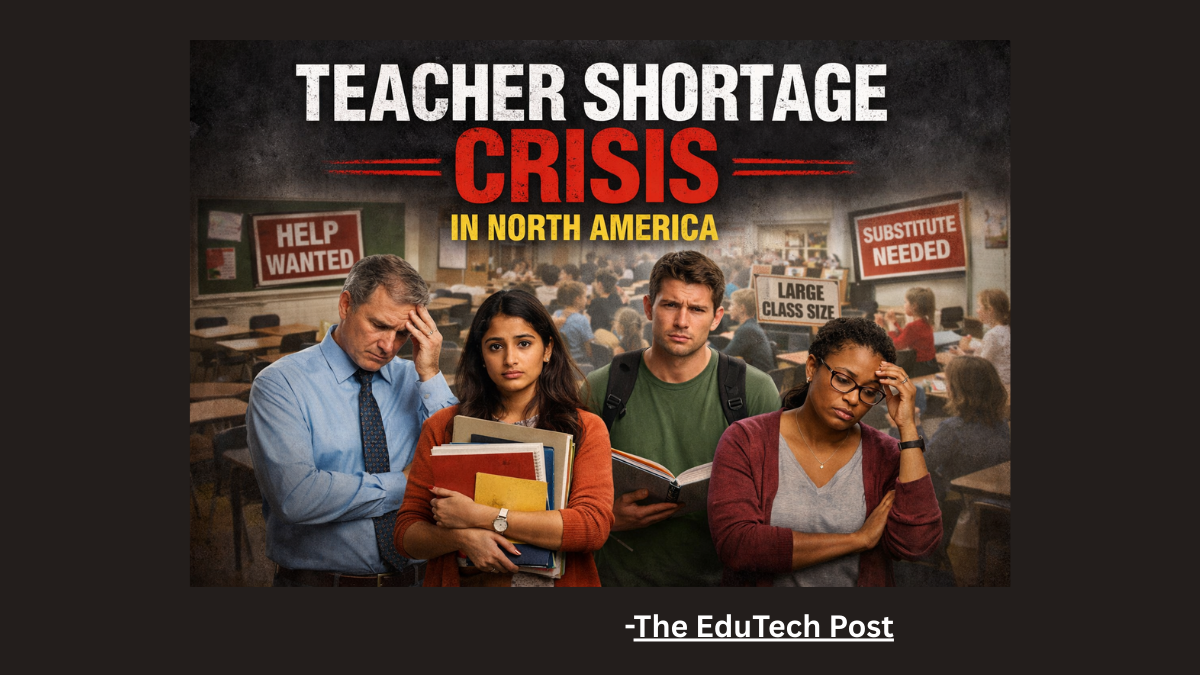
A silent crisis is unfolding across classrooms in North America. Schools in both the United States and Canada are facing a severe shortage of qualified teachers, forcing institutions to rethink hiring, classroom sizes, and even teaching methods.
What was once a temporary issue during the pandemic has now become a long-term structural problem—one that is directly impacting student learning outcomes and the future of education.
📊 The Scale of the Crisis
Recent data shows just how serious the situation has become:
- Over 411,000 teaching positions in the United States are either unfilled or staffed by under-qualified teachers
- That’s roughly 1 in 8 teaching positions affected nationwide
- More than three-quarters of US states are experiencing teacher shortages
In Canada, the situation is also alarming:
- Teacher demand is structural and long-term, not temporary
- Aging workforce + rising student population are increasing pressure on schools. This is no longer a local issue—it’s a North America-wide education crisis.
Recent reports highlight a worrying trend:
- US schools, especially in rural areas, are losing international teachers due to visa restrictions and rising costs.
- Many districts relied heavily on foreign educators, and now that pipeline is shrinking
- Schools are being forced to:
- Hire underqualified staff
- Use online/remote teachers
- Increase class sizes
This shows the crisis is not improving—it’s getting worse in 2026.
⚠️ Why Is There a Teacher Shortage?
1. 📉 Fewer People Want to Become Teachers
- Enrollment in teaching programs has declined significantly over the years
- Teaching is seen as low-paying and high-stress
👉 Result: Shrinking pipeline of new teachers
2. 🚪 High Teacher Burnout & Attrition
- Around 90% of teacher demand comes from attrition, not retirement
- Teachers are leaving due to:
- Workload pressure
- Lack of support
- Mental health stress
3. 💰 Low Salaries vs High Expectations
- Teachers often work 50+ hours per week with relatively lower pay
- Rising cost of living in North America worsens the issue
4. 👴 Aging Workforce (Especially in Canada)
- Many teachers are nearing retirement
- Not enough young educators to replace them
5. 📚 Subject-Specific Shortages
Some areas are hit harder than others:
- STEM (Science & Math)
- Special Education
- Rural schools
Every US state reports shortages in multiple subjects
🏫 How Schools Are Coping
To manage the crisis, schools are taking unusual steps:
✔️ Hiring Uncertified Teachers
Many schools are hiring individuals without full teaching qualifications.
✔️ Increasing Class Sizes
More students per classroom → reduced individual attention.
✔️ Using Online/Virtual Teachers
Some districts are using remote teaching platforms to fill gaps.
In some cases, institutions are also turning to AI tools in education to support learning, helping bridge the gap created by the shortage of qualified teachers.
✔️ Recruiting International Teachers
But even this solution is now under pressure due to visa challenges.
Impact on Students
The teacher shortage is not just a staffing issue—it directly affects students:
- 📉 Lower learning outcomes
- 👩🏫 Less individual attention
- 📚 Limited subject availability (especially STEM)
- 😟 Increased classroom stress
In simple terms: fewer teachers = lower quality education.
This growing gap in quality education can also affect how students prepare for future careers for students, especially in a world where skills and adaptability matter more than ever.
🎥 Teacher Shortage Crisis Explained (USA & Canada)
🌍 A Global Crisis, Not Just North America
This issue extends beyond the US and Canada:
- Experts warn of millions of teacher shortages worldwide by 2030
- Education systems globally are struggling to recruit and retain teachers
North America is part of a larger global education challenge
💡 Solutions: What Can Be Done?
1. 💰 Better Pay & Incentives
Higher salaries and benefits can attract more talent.
2. 📈 Improve Working Conditions
- Reduce workload
- Provide mental health support
3. 🎓 Alternative Certification Pathways
Programs that allow professionals to become teachers faster.
4. 🌍 Smart Immigration Policies
Making it easier for qualified international teachers to work.
5. 🧠 Invest in Teacher Retention
Keeping existing teachers is more effective than replacing them.
⚖️ Final Verdict
The teacher shortage crisis in North America is no longer a future concern—it is a present reality.
👉 Schools are struggling to fill classrooms
👉 Students are already feeling the impact
👉 And without urgent action, the situation could worsen
In 2026, one thing is clear:
The future of education depends not just on technology—but on teachers.