










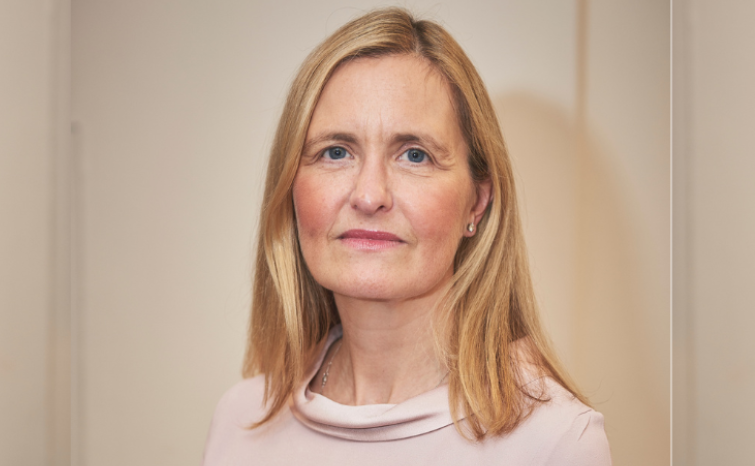
Dr Henrietta Hughes OBE, England’s patient safety commissioner (Credit: Photographs by Photographer London)
The rollout of AI scribes across the NHS should be accompanied by national oversight to ensure safe and trustworthy use of the technology, according to a new public dialogue report.
Participants in the research said national bodies should play a central role in providing assurance that AI scribes are being used appropriately, with checks on data security, staff training and the accuracy of AI-generated outputs.
The dialogue, which took place in March 2026, was commissioned by healthcare AI firm Newton’s Tree amid the increasing use of AI scribes in healthcare and sought to understand public expectations around their deployment.
Recollective, an online platform where participants were provided with information and invited to share feedback, comments and reactions, was used to gather insights followed by a one-day face-to-face workshop.
Researchers found that awareness of AI scribes among the 41 respondents was low, leading to frustration when they learned the technology was already being used in some NHS settings.
Participants said patients should be informed when AI scribes are being used and given the opportunity to opt out, in line with recent NHS England guidance.
Professor Henrietta Hughes, Patient Safety Commissioner for England and deputy chair of the National Commission into the Regulation of AI in Healthcare, said: “These findings reinforce a simple truth: in the ever-evolving AI landscape, healthcare must continue to work for patients first.
“Transparency, meaningful choice and responsible handling of data are key to protecting patient safety, reducing inequalities and building confidence in the future of care.
“Above all, patients’ experience must remain central with technology supporting, rather than disrupting, the relationship between patient and clinician. Embedding these expectations is essential to delivering safe care and maintaining trust.”
The report also highlighted concerns about the use of AI during sensitive consultations. Participants supported clinicians having discretion about when to use the technology, citing discussions involving domestic abuse and other highly personal issues as examples where AI scribes may be inappropriate.
Accuracy also emerged as a key theme throughout the dialogue. Respondents recognised that AI-generated records were unlikely to be flawless, but said the NHS should remain accountable for the quality of clinical documentation rather than technology suppliers.
AI scribes are designed to listen to healthcare consultations and automatically generate clinical notes, summaries and other documentation, helping clinicians reduce administrative workloads.
Their adoption is being supported through national NHS policy, with a growing number of healthcare organisations introducing the technology.
Many participants called for regular monitoring of AI scribe performance through audits, spot checks and other quality assurance processes to ensure errors are identified and addressed.
Professor Lord Darzi, director of the Institute of Global Health Innovation, Imperial College London, said: “AI scribes show promise for the NHS, but a significant voice has been absent from the conversation about the implementation of AI scribes: the patient.
“This work helps to fill this gap. I extend my thanks to the participants from across the UK for sharing their time and lived experiences, and I hope that this report will help to provide a roadmap to ensure transparency, equality, and safety within this space.”
The report concludes that while participants generally recognised the potential benefits of AI scribes, stronger public awareness, transparent governance and robust oversight will be essential to maintaining trust as adoption accelerates across the NHS.