








Over the past few weeks, fertiliser prices have been significantly affected by the price shock from the war in the Gulf, with AHDB reporting that the price of granular urea rose around 36% between February and March 2026, citing the Middle East situation as the main immediate cause.
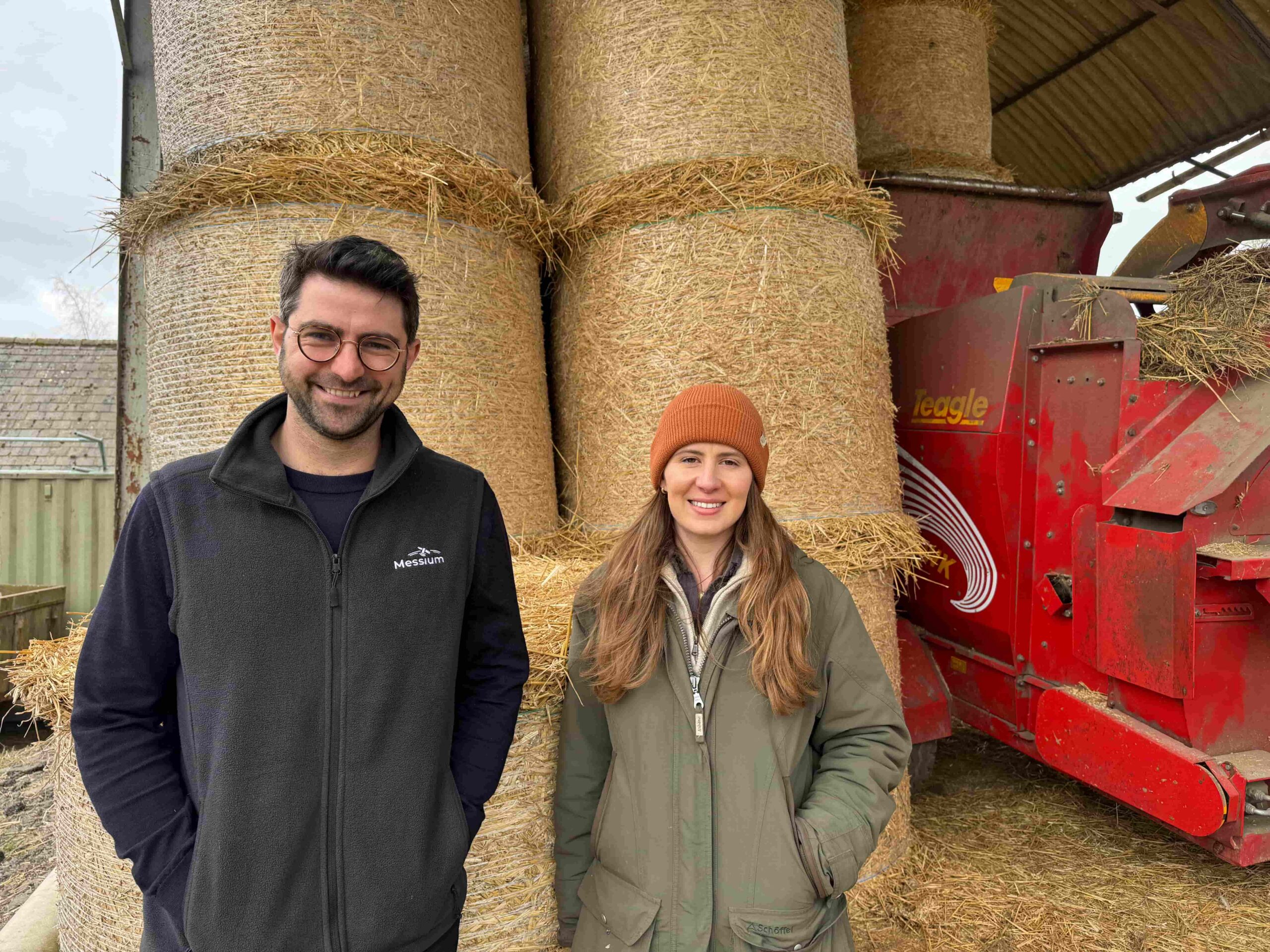
Consequently, agronomist and farmer Louise Penn is finding new ways to reduce fertiliser costs and says that having satellite technology for precision application enables her to make more efficient use of what is becoming an increasingly expensive input.
“Nitrogen is probably one of the most expensive inputs when it comes to growing a crop of wheat, barley, or oilseed rape. So, if we can be really targeted, not only because we’re being encouraged to be more sustainable within our farming practices, but because nitrogen is so expensive,” she says.
Hyperspectral Satellites vs. Market Tech: Nitrogen Reduction
Spencer Terry, Messium’s Commercial Director, explains that their satellite imagery is distinctive from other nitrogen technologies that largely rely on ‘Normalised Difference Vegetation Index (NDVI) to estimate greenness and biomass as a proxy for nitrogen health.
Messium instead uses hyperspectral imagery to directly detect nitrogen levels in each plant at a cellular level. The process captures around 400 wavelengths and evaluates how they reflect off crops, focusing on those responsive to nitrogen. This allows farmers to apply nitrogen more precisely, reducing overall nitrogen usage.
“We’re using a new type of hyperspectral satellites that are the first to be able to directly detect the nitrogen balance in the crop and measure the uptake of nitrogen in the crop. So, we can tell whether a crop is over-fertilised, under-fertilised, or well-fertilised throughout the growing season,” Spencer says.
“Previous generations of satellites were looking at vegetation and using that greenness to approximate the nutrient health and status of the crop. What we’re measuring is the nutrient status of the crop straight away, directly by looking at the nitrogen balance”.
As part of Agri-TechE’s ambassador programme, the non-profit organisation’s initiative to bring farmers and technology companies together to collaborate, trial, and better understand challenges and solutions in the agricultural sector, Messium has been working with Louise Penn to monitor satellite imagery on her family farm in Northamptonshire.
Louise has already set up the platform and uploaded all relevant field data, with unique field names, yield targets and soil types.
After adding the data on the amount of nitrogen applied on their first dose, the images from Messium will help support precision targeting in future applications to reduce nitrogen use.
“What we’ll probably do is trial Messium versus just standard farm practice,” Louise adds.