






Ever since Kevin Kelly and Gary Wolf coined the term quantified self nearly two decades ago, a whole industry has grown up around personal activity trackers to count our steps, optimize our sleep, and monitor biomarkers like heart rate and blood sugar.
But what about our brains? Cognitive health is not only one of the biggest challenges as we age, but it’s also one of the clearest indicators of our overall wellness, happiness, and even how we respond to the food we eat.
In other words, if we’re going to use technology to monitor and optimize our bodies, it makes sense that the next step is doing the same for our minds. A Fitbit for our brains, if you will.
The idea of “optimizing” brain health isn’t new. The past decade has seen a wave of nootropics, supplements, and “brain-boosting” formulations promising better focus, memory, and mental clarity. But much of that category has lived in a gray zone between science and snake oil, with outcomes that are often hard to measure and even harder to personalize.
That’s where a new class of technologies is emerging, one that moves beyond ingestibles into direct interaction with the brain itself.
One company working on this is U The Mind, which makes non-invasive technology (i.e., non-implantable) designed to both monitor and modulate brain activity. The company’s approach falls into a growing field known as neuromodulation, in which electrical signals are used to influence brain function.
I recently caught up with CEO Mo Abouelsoud on The Spoon Podcast to talk about where he sees this space going and why he believes brain health is poised to become a core pillar of the modern wellness stack.
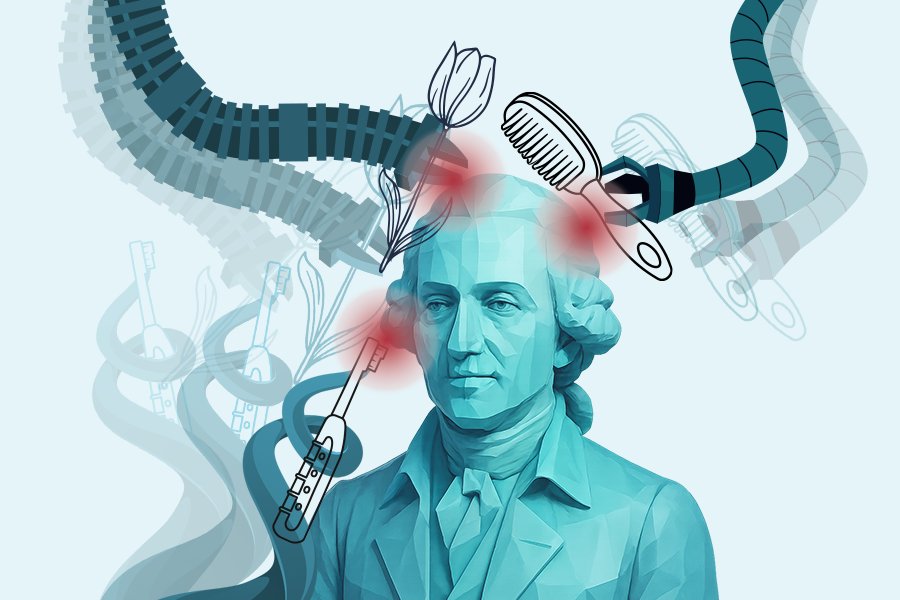
“We develop brain stimulation devices for many different neurological disorders, as well as cognitive enhancement,” Abouelsoud told me. “So brain stimulation sends these small electrical signals, super small, the same amount that runs in a toothbrush into certain areas of the brain to activate that region.”
Unlike implantable systems such as those being developed by Elon Musk’s Neuralink, which require surgery to place electrodes directly on or in the brain, U The Mind’s device works entirely from outside the body. The system sends signals through the skull, a challenge that has historically limited effectiveness. According to Abouelsoud, his team has developed a way to overcome that barrier: “We can do all of that from the outside. We have patented a way to best send signals from the outside, without the skull and the skin and all that fat distorting the signal.”
While it’s yet to be seen if the technology is as effective as implantable systems, my guess is that non-invasive approaches will ultimately be a much bigger market if they are even remotely comparable. After all, who wants an Elon Musk-controlled chip in their brain?
For Abouelsoud, the rise of brain-focused tech is a natural extension of the quantified self movement. As consumers increasingly track everything from sleep to glucose levels, he sees brain function as one of the most important missing signals. “A very important vital is brain function, because if you’re not there cognitively, it can be disastrous.”
While the company’s early focus was on systems that could help those with significant illnesses such as Parkinson’s or Alzheimer’s, they are working on an over-the-counter consumer device for later this year that is targeted more at the early adopter health hacker set.
“We have a device coming out later this year that will be recording brain information as well as brain stimulating,” said Abouelsoud. He described the system as one that can be used at different points throughout the day and paired with inputs such as diet and behavior to better understand how daily habits affect cognitive performance.
Wading into the general consumer space with brain health systems is exciting, but it also brings risks. Unlike a general wearable or a supplement, neuromodulation systems actively interact with the brain, and the margin for error is much smaller. Abouelsoud said that if the signals aren’t optimized correctly, they can potentially result in less desirable outcomes such as worsened sleep or anxiety.
Still, he believes this category is just at the beginning and will become on par with other health-hacking and DIY wellness technologies.
“These next 10 years, we’re going to see an explosion of brain stimulation devices,” he said. “I think brain stimulation is one of the few types of technologies that is going to stick around for the decades ahead because of how important and integral it is in terms of activating neuronal circuits inside the brain.”
You can listen to my full conversation with Mo Abouelsoud by clicking play below, on Apple Podcasts or Spotify, or wherever you get your podcasts.