








The genetic basis of potato dormancy
The project is taking two approaches to investigate the genetic basis of dormancy. One uses dedicated breeding populations from Solynta to screen for tubers with contrasting dormancy, which will be used for genetic studies to identify genetic signals that can ultimately lead to the identification of causal genes.
This information will then be used to support marker assisted breeding of varieties with naturally enhanced dormancy, MariCarmen says.
“Because Solynta works with well-characterised diploid germplasm, rather than the more complex tetraploid genetics of the current commercial varieties, it becomes much easier for scientists to study the genetics and biology of traits such as dormancy.”
A second, more targeted approach uses analysis of selected genes known to be involved in tuber initiation and development that could influence tuber dormancy as well.
“We will functionally characterise these candidate genes by silencing or over-expressing them under laboratory conditions to evaluate their role in dormancy.”
The findings could eventually be used to breed new potato varieties with enhanced dormancy, which could be achieved more rapidly using state-of-the- art precision breeding, MariCarmen suggests.
Pre-harvest growing environments
The project also explores how pre-harvest growing environment and management, can influence tuber dormancy.
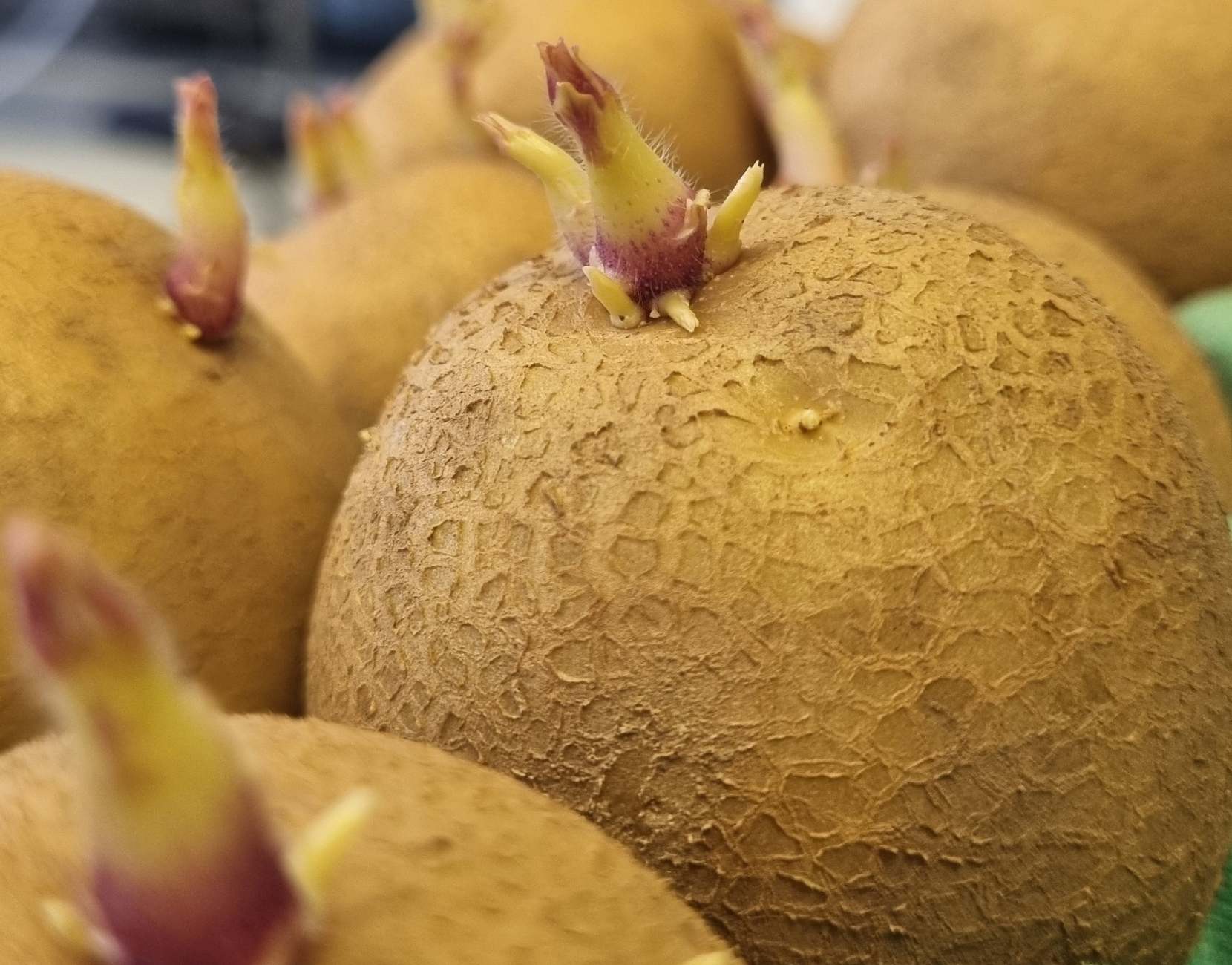
These methodologies are being supported by the development of a rapid phenotyping model that can act as an early warning system for dormancy break. “We are taking thousands of images of potatoes to train an AI-model that will automatically identify early signs of sprouting using a machine learning approach originally used in medicine.”
From a research perspective, an accurate model would help speed up and increase accuracy of assessing potatoes produced during screening of breeding lines, MariCarmen notes.
In addition to visual detection, the project is also examining whether electrical signals – detected by minute electrodes installed in plants in the field or tubers in store can be used to predict dormancy break by detecting changes in electrophysiological measures.