









AMD’s FSR Redstone update was finally launched earlier this week – roll out the rendered red carpet – and it arrived boasting four separate pieces of tech.
Well, I say these four features have arrived, but they haven’t – or one of them hasn’t, rather, and it seems a long way off – plus one of them is actually here already, and isn’t new at all.
- FSR Upscaling
- FSR Frame Generation
- FSR Ray Regeneration
- FSR Radiance Caching
If you thought AMD already had frame generation in FSR, you’re confused about what FSR Frame Generation is, or if you thought FSR 4 was upscaling, you’re scratching your head about what FSR Upscaling is – is it FSR 4, FSR 4.1, or a new version entirely? – then I totally get where you’re coming from.
AMD has not done a very good job of making some of this clear, so I’m going to step in and offer my take. I’m going to go through these four features, one by one, and define what they really are and whether they’ve actually arrived or are still waiting in the wings (cough, Radiance Caching, cough).

FSR Upscaling
Upscaling, for the uninitiated, takes a lower-resolution frame and scales it to a higher resolution, delivering near-native quality while running faster and more smoothly. As AMD officially bills this, FSR Upscaling was “formerly AMD FidelityFX Super Resolution 4,” otherwise known as FSR 4.
It was formerly FSR 4, but it’s now called FSR Upscaling, dropping the numbering scheme. This is confusing because we’re all used to the numbers at this point, and AMD doesn’t make it explicit that there’s no difference between FSR 4 and the new take.
However, buried slightly lower in the blurb, AMD says: “FSR 4 has been renamed FSR Upscaling to better distinguish between the various features that now make up FSR Redstone.”
So, FSR Upscaling is FSR 4, and this is why the launch press slides compared FSR Upscaling to FSR 3.1, and not FSR 4 – because it is FSR 4, just renamed.
That doesn’t mean FSR Upscaling isn’t a slightly tweaked version of FSR 4, but if there is any under-the-hood tinkering, it’s not worth mentioning (as you can be sure that if there were a selling point in that respect, AMD would have said something).
To sum up, then, FSR Upscaling isn’t a new technology; it’s just AMD’s existing FSR 4 given a different naming convention for Redstone. And, of course, it’s up and running now with all the games that FSR 4 was compatible with.
So, nothing much to see here, let’s move along…

FSR Frame Generation
As I mentioned at the outset, this one could have you confused because FSR 4 already had frame generation (and indeed FSR 3 did, long before it).
What’s different here is that Redstone’s take on frame generation is a sizeable step forward, as it employs AI (machine learning) to produce higher frame rates by inserting AI-generated frames between real frames. AMD’s previous takes on frame gen did not use AI.
So, this is a major difference, and it has a big impact on the image quality of frame generation, at least based on early testing. Redstone’s FSR Frame Generation looks to be a winner, then, and catches up with DLSS 4, albeit what it doesn’t offer is Multi Frame Generation, which Nvidia’s GeForce graphics cards benefit from (the RTX 5000 models, anyway).
The catch with Redstone, and the switch to AI for frame generation, is that it requires hardware acceleration that makes it exclusive to RDNA 4 graphics cards. This is also true for FSR 4, which was already machine-learning-based, and for the other two pieces of tech we’ll look at next.
As PC Gamer observes, to differentiate between the old (non-AI) frame generation and the new AI-powered Redstone version, AMD has two names. These are FSR Frame Generation (Analytical) and FSR Frame Generation (ML), the latter being the AI take (which uses machine learning or ML). Messy? Yes, it’s hardly very friendly for less tech-savvy consumers.
AMD’s FSR Frame Generation (ML) is already supported by around 30 games (that’ll be up to 40 titles by the end of this year, AMD tells us).

FSR Ray Regeneration
This is a completely new addition to Redstone, and it’s a way to use AI to improve ray tracing results. It aims to remove noise and glitches and implement those fancy rays at a lower rendering cost, so it’s more performant overall with RDNA 4 GPUs. This is essentially the equivalent of Nvidia’s Ray Reconstruction (maybe Intel can eventually implement a tech called Ray Revitalization for Arc GPUs, perhaps).
Now, I say FSR Ray Regeneration is new, but it isn’t exactly, as it was already out well before AMD launched Redstone this week, oddly. In fact, this feature arrived with Call of Duty: Black Ops 7 a month ago, although only in certain modes.
It seems to work well enough in this limited incarnation, again based on initial tests, but Ray Regeneration is only in parts of that Call of Duty game right now.
FSR Radiance Caching
This is another new piece of AI-powered tech, and this time it aims to deliver better lighting in a more performant manner, akin to Nvidia’s RTX Neural Radiance Cache feature. However, FSR Radiance Caching is the odd one out here, as this particular innovation isn’t actually in any games at all right now – and it may not be for quite some time.
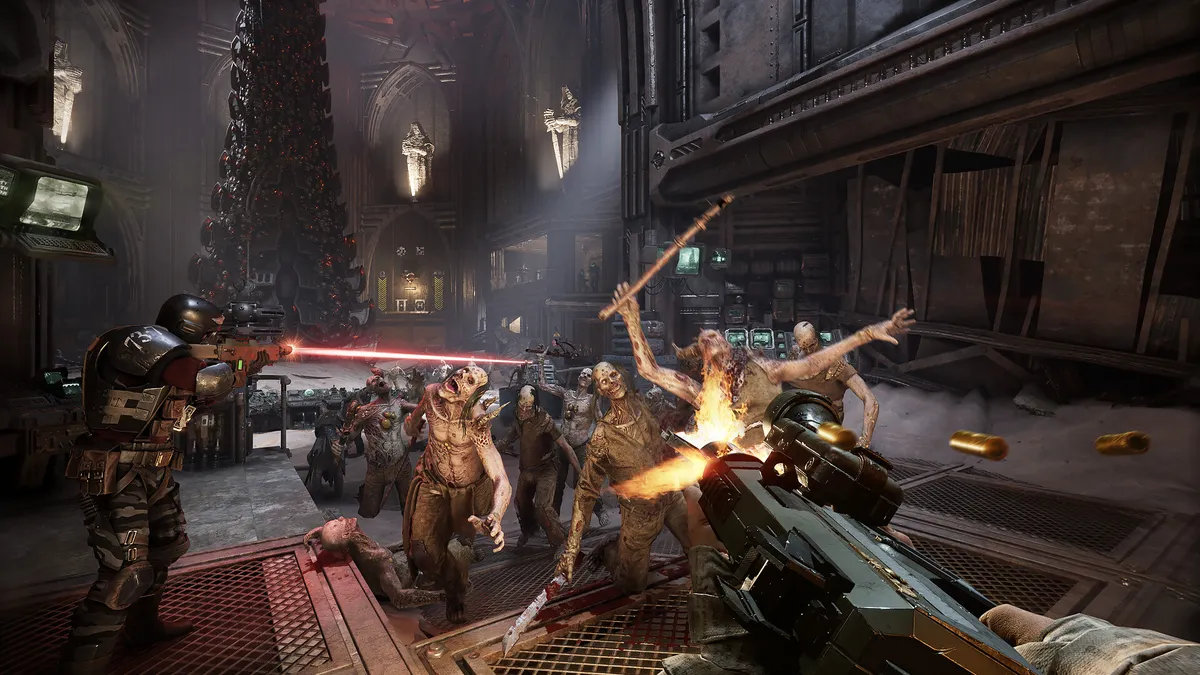
At the Redstone launch, AMD showcased Radiance Caching with Warhammer 40K Darktide, which led gamers to assume this title would be the first to carry the fancy new lighting innovations – but apparently not.
According to a Wccftech report, the developer of the Warhammer game, Fatshark, said that this tech is still ‘experimental’ and not planned for Darktide’s live build. Apparently, Radiance Caching still requires development and optimization, so it’s not clear when it might eventually grace Darktide – but it doesn’t sound like it’ll be any time soon.
Indeed, we don’t know when this fourth piece of the puzzle for Redstone will be in any game, and there could be quite a long wait before we see it in action. All we know is that this tech will debut sometime in 2026, AMD promises.
Watch On
The real pain point for Redstone
All in all, this has seemed like a rather haphazard deployment of Redstone, and I feel AMD has got this launch and the associated messaging around its neck rather. The revelation of all these different elements feels disjointed, and some of the naming is confusing.
Does this matter all that much, though? Well, perhaps I’m making a song and dance about it, and granted, the real meat of Redstone is how well all this tech works, not how it’s framed. And on that score, the initial signs are promising, and that’s the most important thing.
The biggest pain for gamers, though, won’t be any confusion around names, or what this or that tech does, or used to be called – it’ll be the RDNA 4-only barrier to entry, which forbids previous-gen Radeon graphics cards from getting the benefit of Redstone. That’s going to hurt many RDNA 3 owners, especially if they forked out for a flagship RX 7900 XTX at a wallet-quaking price.
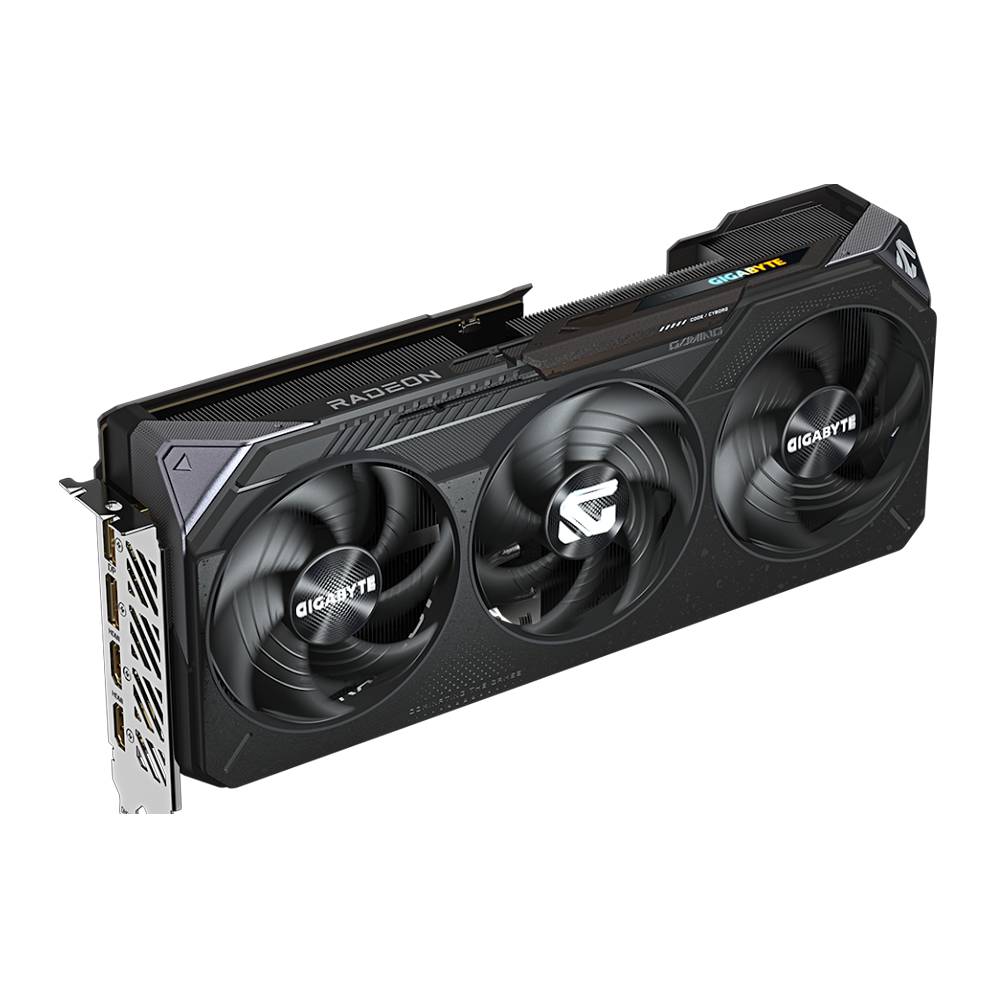
The best graphics cards for all budgets
Follow TechRadar on Google News and add us as a preferred source to get our expert news, reviews, and opinion in your feeds. Make sure to click the Follow button!
And of course you can also follow TechRadar on TikTok for news, reviews, unboxings in video form, and get regular updates from us on WhatsApp too.