









Nearly 2,500 years ago, Plato wrote: ‘necessity is the mother of invention’. And with ammonium nitrate rising by over 32% since the start of the year, the second time farmers have seen this kind of rise in the last four years, it’s safe to say farmers would relish an alternative approach to crop nutrition. Especially one that’s both homegrown and sustainable.
So, over a century after chemically manufactured nitrogen and other nutrients became the mainstay, could we be seeing a biological takeover? Having seen how biological organisms can provide crop nutrition, reducing synthetic fertiliser use by up to 50% without reducing yields, Marta May, Managing Director of BactoTech, believes so.
BactoTech produces microbial biopreparations, including Bacillus-based biostimulants and biofertilisers, that aim to support sustainable agriculture by enhancing soil fertility and biodiversity, without the risks of over-fertilisation or reliance on chemical fertilisers.
By adding live organisms to the soil, microbial biopreparations enable plants to use atmospheric nitrogen when needed, rather than relying solely on artificial fertiliser. They do this by colonising the plant’s root zone, living symbiotically with the crop, exchanging nutrients.
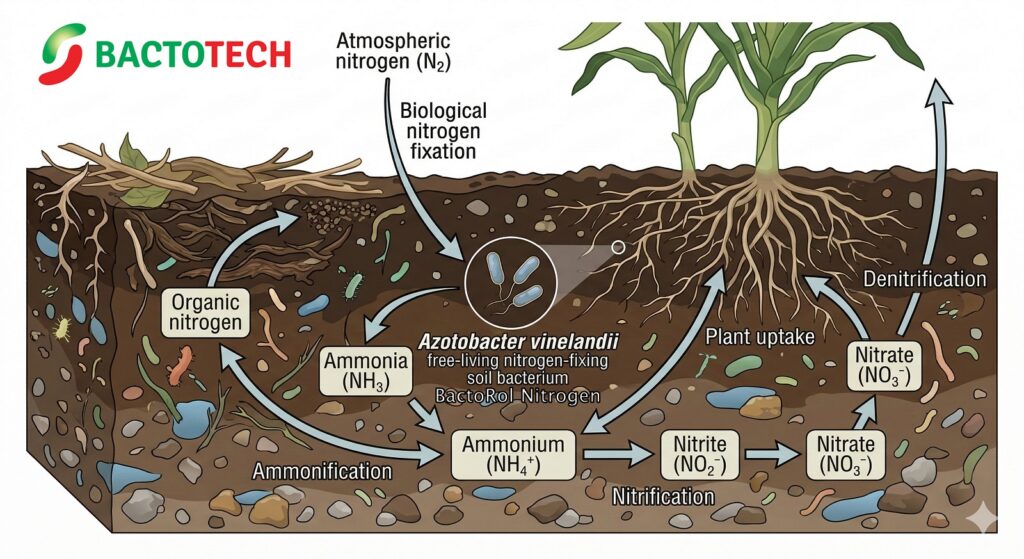
Marta, a trained molecular biologist who joined BactoTech in 2024 alongside her microbiologist husband, explains that the air is made up of over 70% nitrogen. By using these natural organisms, plants can utilise what’s already available in the atmosphere.
“Sometimes, artificial fertiliser goes unused or is wasted. Live organisms help the plant access nitrogen when it needs it. It’s a smarter approach.
“We see our products as something to use alongside existing crop nutrition programmes, not a sudden replacement for everything they already do. Our role is to help improve the efficiency of the existing system,” she says.
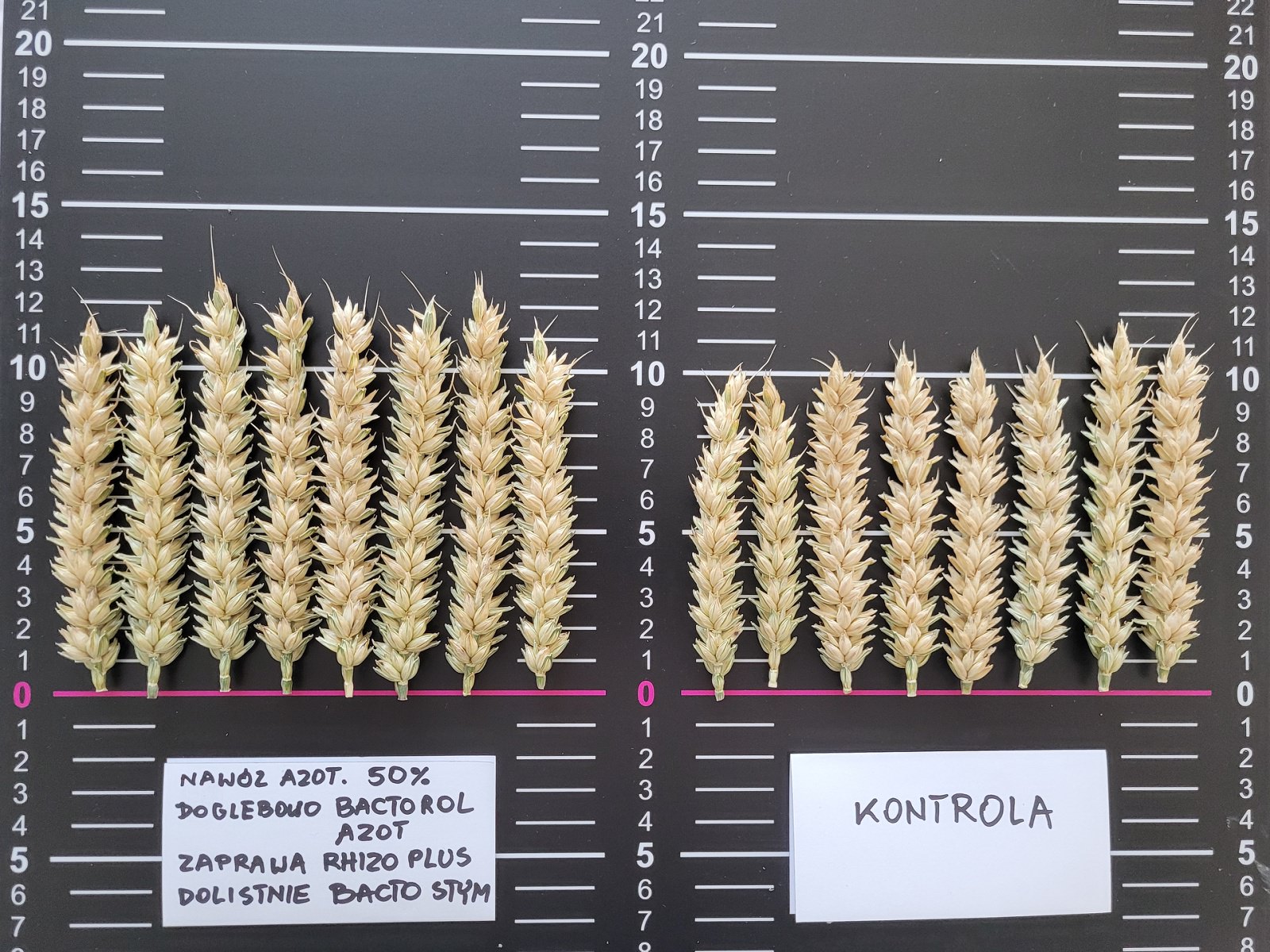
In trials last summer in Poland, BactoTech tested their natural products against a competitor’s artificial fertiliser. The trial monitored four soil strips and compared artificial fertiliser with bacterial nitrogen treatments. This is the type of approach Marta encourages farmers new to biologicals to adopt because it allows them to transition to a new system with minimal risk.
In the trials, plots receiving only artificial fertiliser saw nitrogen levels decrease after a few weeks, whereas with the BactoTech application, nitrogen levels continued to increase. “The trials reduced the use of artificial fertiliser by 50%, and when our products were used instead, yields remained the same.”